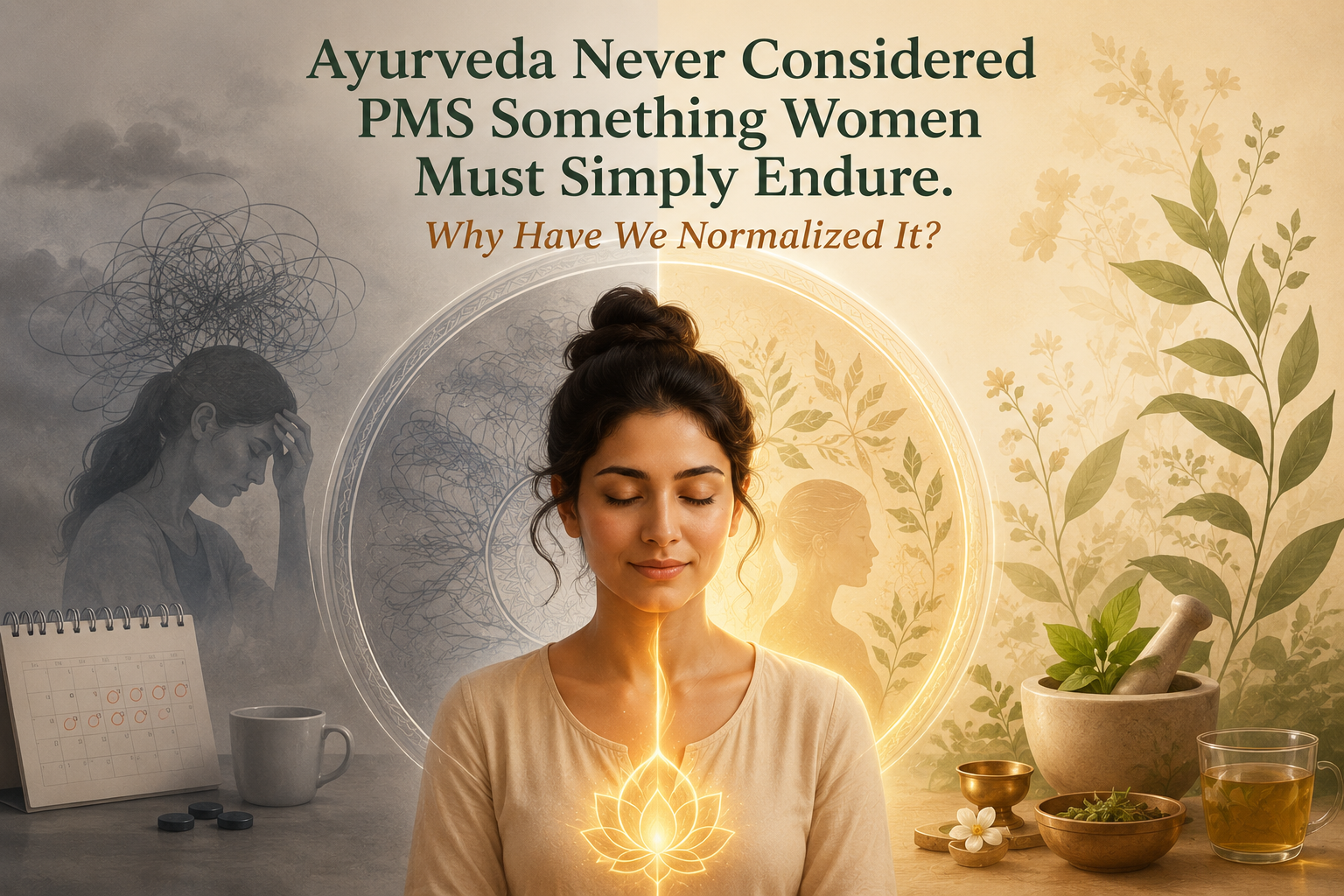
Mood swings. Bloating. Cravings. Fatigue.
For millions of women, these symptoms arrive every month like an unwelcome guest. They’re so common that many women are told they are simply a normal part of being female.
But Ayurveda offers a different perspective.
While occasional discomfort around the menstrual cycle may occur, Ayurveda never viewed persistent premenstrual symptoms as something to be ignored, normalized, or silently endured. Instead, they were seen as signals—messages from the body indicating that deeper nourishment, digestion, and tissue health may need attention.
What If PMS Isn’t Something To Push Through, But Something To Understand?
Premenstrual Syndrome (PMS) affects women in different ways. Some experience emotional symptoms such as irritability, anxiety, mood fluctuations, and low motivation. Others notice physical changes including bloating, breast tenderness, fatigue, headaches, sugar cravings, or digestive disturbances.
Modern lifestyles often contribute to these symptoms through:
- Chronic stress
- Irregular eating habits
- Poor sleep
- Nutrient deficiencies
- Excessive dieting
- Digestive imbalances
- Sedentary lifestyles
Ayurveda recognized centuries ago that the menstrual cycle reflects overall health. Rather than focusing only on symptom suppression, it asks a deeper question:
What is the body trying to communicate?
The Ayurvedic Understanding of PMS
According to Ayurveda, menstrual health is closely linked to:
Agni (Digestive Fire)
Strong digestion is considered the foundation of health. When digestion becomes weak or irregular, nourishment from food may not be properly transformed and distributed throughout the body. Over time, this can affect hormonal balance, energy levels, and menstrual well-being.
Rakta Dhatu (Blood Tissue)
Rakta Dhatu is closely associated with vitality, circulation, complexion, and reproductive health. Healthy blood tissue supports healthy menstrual function. Inadequate nourishment of Rakta Dhatu may contribute to fatigue, weakness, and disturbances around the menstrual cycle.
Poshana (Nourishment)
Ayurveda places tremendous importance on nourishment. Many women today are overworked, under-rested, and undernourished—not necessarily because they lack calories, but because they may lack the quality nourishment required to support their body’s demands.
Sometimes PMS is not merely a hormonal issue. Sometimes it reflects depletion.
Five Traditional Foods Ayurveda Valued for Women’s Nourishment
Long before “superfoods” became a marketing trend, Indian kitchens were already rich in foods traditionally used to support women’s vitality.
1. Halim Seeds (Garden Cress Seeds)
Halim seeds, also known as garden cress seeds, have been traditionally used in many Indian households to support women’s health. These tiny seeds are naturally rich in:
- Iron
- Calcium
- Folate
- Plant protein
- Fiber
Traditionally, they have been included in laddoos, porridges, and nourishing preparations, particularly during periods requiring rebuilding and nourishment. Despite their remarkable nutritional profile, they remain one of the most overlooked traditional foods today.
2. Chaulai (Amaranth)
Long before quinoa became popular, Indian households were using Chaulai. Amaranth is an ancient grain known for its nutritional density and digestibility. It contains:
- Protein
- Calcium
- Magnesium
- Iron
- Fiber
From an Ayurvedic perspective, traditional grains like Chaulai help provide sustained nourishment without relying on highly processed foods. Sometimes the foods closest to our roots are exactly what modern diets have forgotten.
3. Black Sesame Seeds
Few foods hold the same level of respect in Ayurveda as black sesame seeds. Traditionally considered:
- Warming
- Strengthening
- Deeply nourishing
Black sesame seeds naturally provide:
- Calcium
- Iron
- Healthy fats
- Trace minerals
A small daily serving has been valued for generations as part of women’s wellness traditions. Their significance extends beyond nutrition—they symbolize nourishment, stability, and rebuilding.
4. Pomegranate
Not every superfood comes from another continent. Pomegranate has been celebrated in Ayurveda for centuries. It is traditionally appreciated because it is:
- Nourishing
- Refreshing
- Easy to digest
- Supportive of healthy blood tissue
Unlike many health trends that come and go, pomegranate has remained a timeless part of Ayurvedic dietary wisdom. Its gentle nature makes it suitable for many individuals seeking balanced nourishment.
5. Dates with Ghee
Simple. Traditional. Profoundly nourishing.
The combination of dates and ghee has been used for generations when the body requires rebuilding rather than restriction.Dates provide natural energy, minerals, and nourishment, while ghee is traditionally valued in Ayurveda for supporting tissue nourishment and vitality. Together, they represent a principle often forgotten in modern wellness culture:
Healing is not always about removing more. Sometimes it is about nourishing more.
The Takeaway
Ayurveda never considered PMS something women were simply expected to tolerate. Instead, it recognized that menstrual well-being reflects the health of digestion, nourishment, lifestyle, and the body’s deeper tissues.
While every woman is unique and persistent symptoms should always be evaluated appropriately, traditional wisdom reminds us that supporting the body through nourishing foods, proper digestion, rest, and self-care can play a meaningful role in overall menstrual wellness.
Perhaps PMS doesn’t always need another hack. Perhaps it needs more nourishment. More care. More attention. And a return to the wisdom that generations of women understood long before wellness became a trend.
The body speaks before it shouts. The question is: Are we listening?